TRAVEL AT EASE
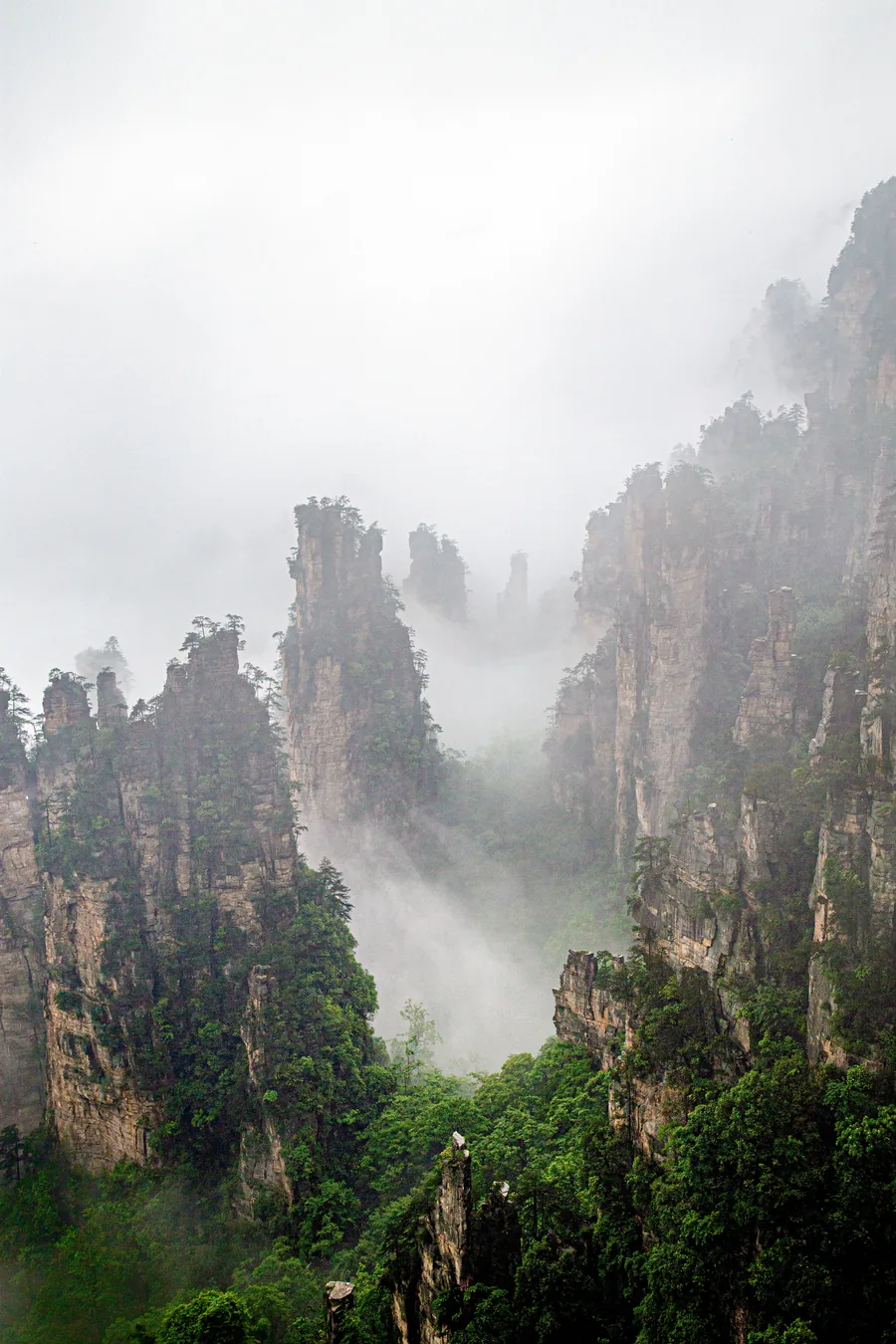
Upright mountains emerging from mist are often the first image of Zhangjiajie. Lower your gaze and forest, ravines and human craftsmanship add another dimension. A mountain can hold your attention for a long time. A piece of weaving can begin with a single thread.
A pattern made on the loom
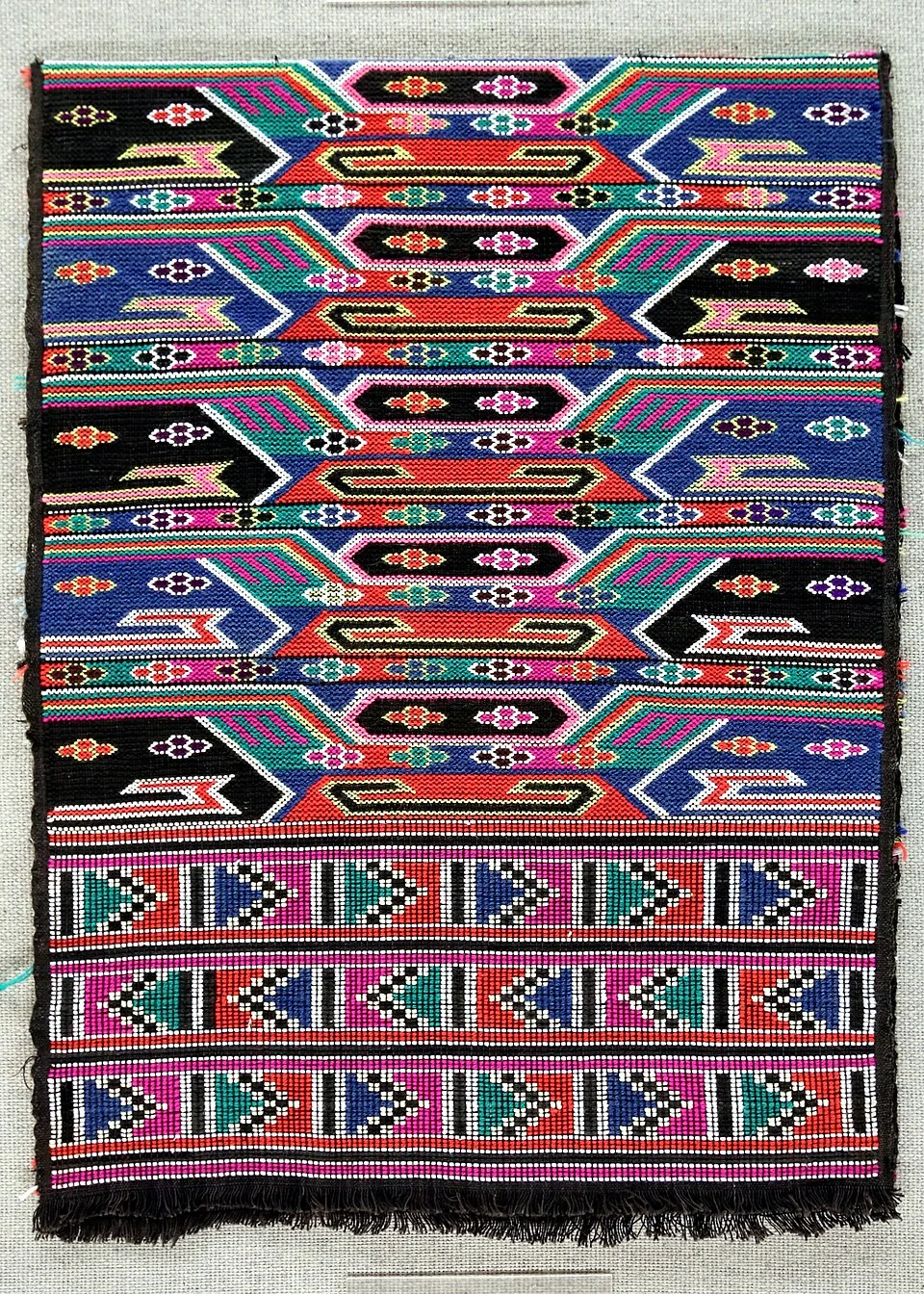
Xilankapu is a representative form of Tujia brocade. Its patterns emerge through weaving, including continuous-warp, discontinuous-weft techniques, rather than embroidery added afterwards. Listed nationally as intangible heritage in 2006, the craft has roots in places including Longshan and Yongshun; its transmission and protection are also documented in Zhangjiajie.
Begin with the meeting of coloured threads. Follow a turn, a repeated motif and the space left around it. Ask who made the piece and from what materials. Distinguishing a handmade work from machine production, and understanding its origin, gives more substance to an encounter than a broad label of ethnic style.
A forest between the pillars
Wulingyuan is more than a collection of summits. Ravines, streams, pools and trees connect the spaces between them. Look far for a silhouette, then closer for roots and branches occupying the rock. From a permitted path, follow the terrain down towards a valley. The isolated peaks begin to form a connected mountain landscape.
Give one viewpoint several looks: first the tallest pillar, then its distance from the next, then the valley partly concealed by the canopy. Mist is never guaranteed. Clearer light reveals folds in the cliffs; overcast weather separates the greens of the forest. Each condition offers something different to notice.
Similar silhouettes, different geology
Wulingyuan’s characteristic pillars are principally quartz sandstone. Their geological story differs from Guilin’s limestone karst, shaped by dissolution. Weathering, erosion and landscape change have helped produce these pillars, walls and ravines. Dense groups of peaks do not automatically belong to the same kind of landform.
With that distinction in mind, find a straight edge in the cliff, trees on a summit and shadow at its foot. Rock, vegetation and air give the scene its depth. A distant view reveals how the pillars are arranged; a closer look finds the meeting of cliff and canopy. Move between those scales to see more than a familiar silhouette.
A local taste: sanxiaguo
Sanxiaguo is a characteristic Zhangjiajie dish. Ask about the actual ingredients and preparation rather than assuming its name guarantees a fixed trio. Check meat, offal and chilli preferences before ordering.
Notice two different kinds of texture
In the mountains, follow rock, canopy and valley. With brocade, follow one thread into a pattern. Natural forms and a maker’s choices each reward a closer look.
Remember the forest, and remember that a craft has individual makers. Both give Zhangjiajie its depth.
Sources and photography
UNESCO · Wulingyuan Scenic and Historic Interest Area ↗
Fu Shan Un / Pexels · Photo source · Pexels License
Alexey Yakovlev / Wikimedia Commons · Photo source · CC0 1.0