TRAVEL AT EASE
Begin with the small scale of Chengdu: a tea bowl, a chair, the space between people sharing a table. Then widen the view towards the plain and its rivers. Everyday encounters and the land beyond the city give each other substance.
Tea is also a reason to gather
The traditional gaiwan has a bowl, lid and saucer. Lift the lid for the aroma, move the floating leaves aside, and notice how the infusion changes as water is added. Bamboo chairs and tea tables make room to settle in. The pleasure belongs to the drink, and to the conversations around it.
Archives give that public life a history. The National Archives Administration describes a 1941 business-registration application from Heming Teahouse and a 1942 tea-price assessment by the local trade association. Registration and collective negotiation leave concrete traces of how teahouses participated in the city’s commerce and everyday life.
A table within the shared city
Spend time with the arrangement of a teahouse as well as its menu. Tables and chairs bring people together; conversation and quiet can occupy the same space. Friends meeting, people resting and neighbours talking make ordinary life a meaningful part of a visit, rather than something to pass through between sights.
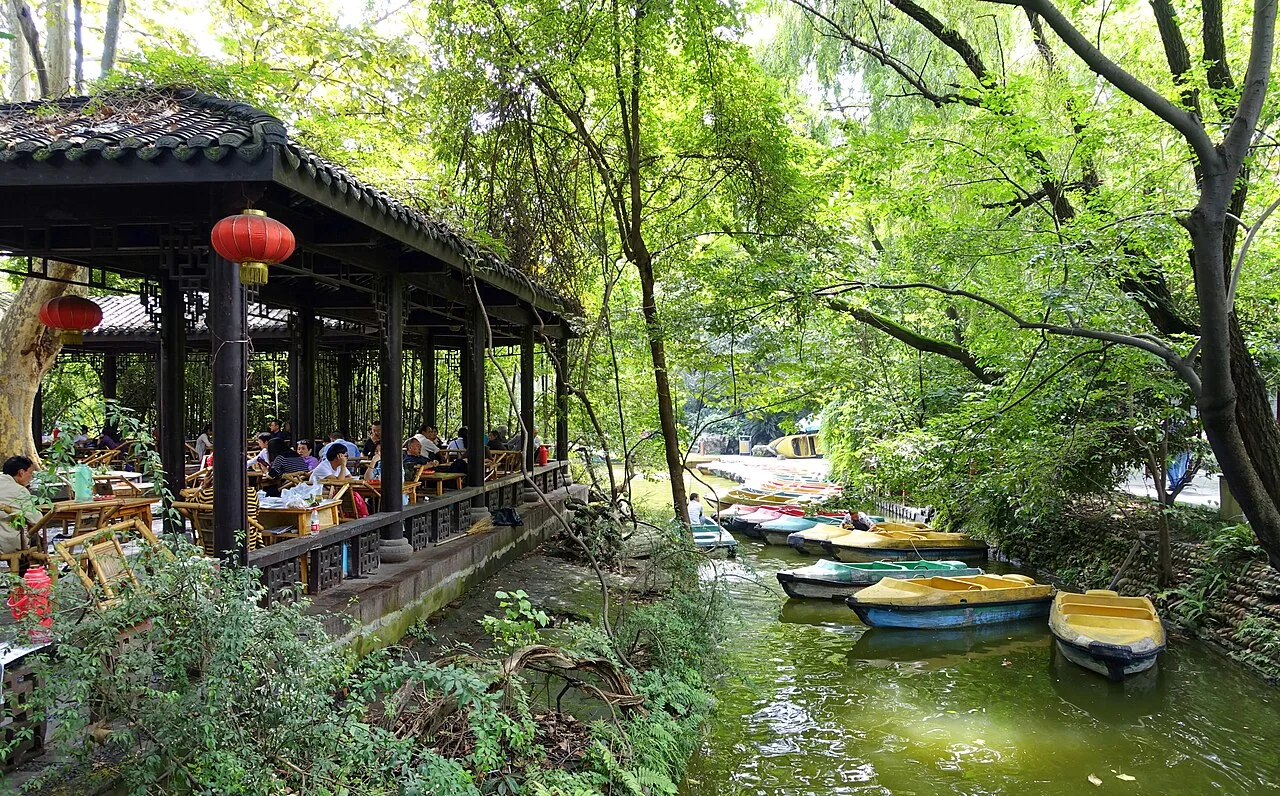
Old teahouses also hosted qingyin singing and yangqin performances. Records document film screenings and the introduction of piped-water technology, showing places involved in cultural and social change as well as tea. The photograph here shows a waterside teahouse in People’s Park in 2015: bamboo chairs beneath the eaves, a channel and tree shade give public life room to extend outdoors.
Water from the Minjiang into the plain
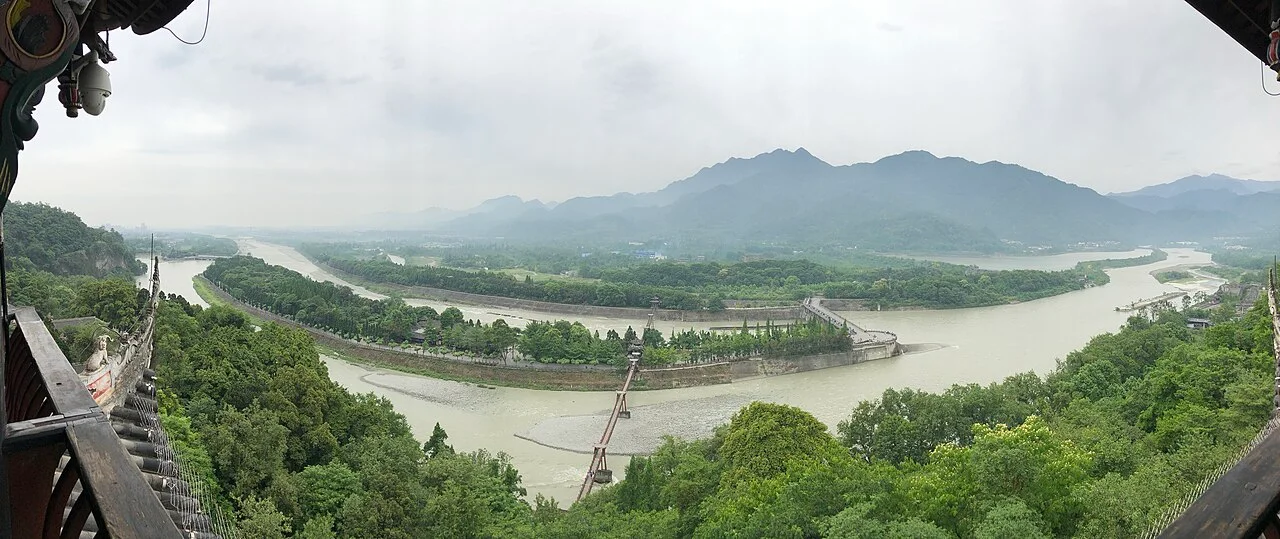
Dujiangyan extends the story into a much longer timescale. In the western Chengdu plain, this ancient irrigation system still regulates the Minjiang and supplies farmland. It uses the river’s terrain and flow to divide water, release sediment and manage floods. Its achievement rests on understanding natural processes and maintaining the system over time.
Bring that wider view back to the tea table. Chengdu’s richness has a material setting: water reaches the land, cultivation continues, and urban life grows within that landscape. A meal or a pause beside a street can open a conversation about the plain beyond it. Mountains, water and human work give the scenery a lived scale.
Make time for the layers of Sichuan flavour
Chengdu’s cooking brings different flavours together. Notice how numbing fragrance, acidity, savouriness and lingering tastes interact instead of treating a meal as a test of heat. Familiar dish names can still lead to different preparations; ingredients and technique offer a good place to begin a conversation.
Connect the near view with the wider landscape
A covered bowl gives a tea table its rhythm; the division of water sustains a cultivated plain. At very different scales, both invite attention to the objects, spaces and continuing care that support everyday life.
Part of Chengdu’s pleasure lies in sitting down; another part lies in staying curious about what makes that life possible.
Sources and photography
UNESCO · Mount Qingcheng and the Dujiangyan Irrigation System ↗
UNESCO Creative Cities · Chengdu gastronomy ↗
Daderot / Wikimedia Commons · Photo source · CC0 1.0
星星 (Qiu Xingxiang) / Wikimedia Commons · CC BY-SA 4.0 · resized, WebP · Photo source · CC BY-SA 4.0