TRAVEL AT EASE
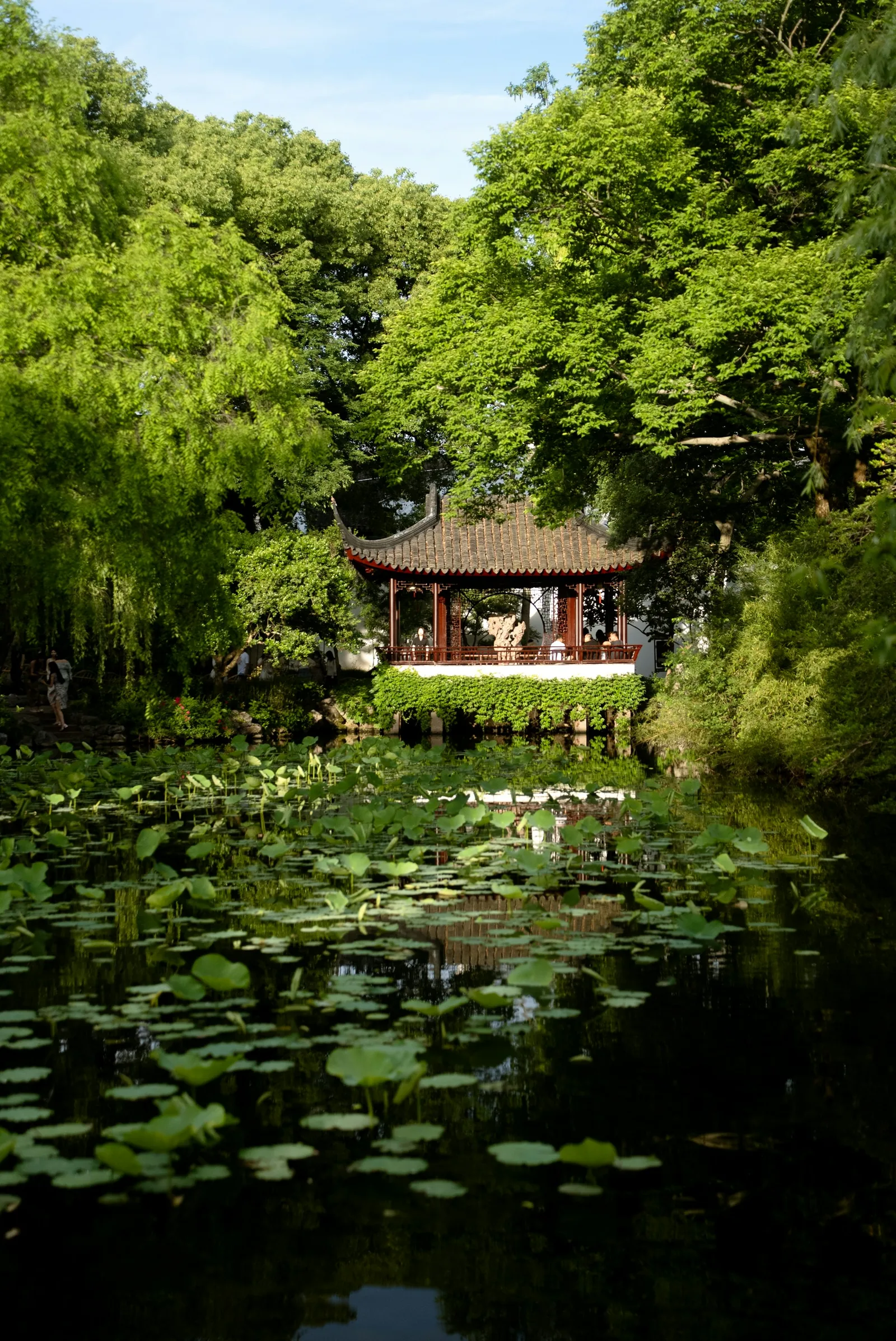
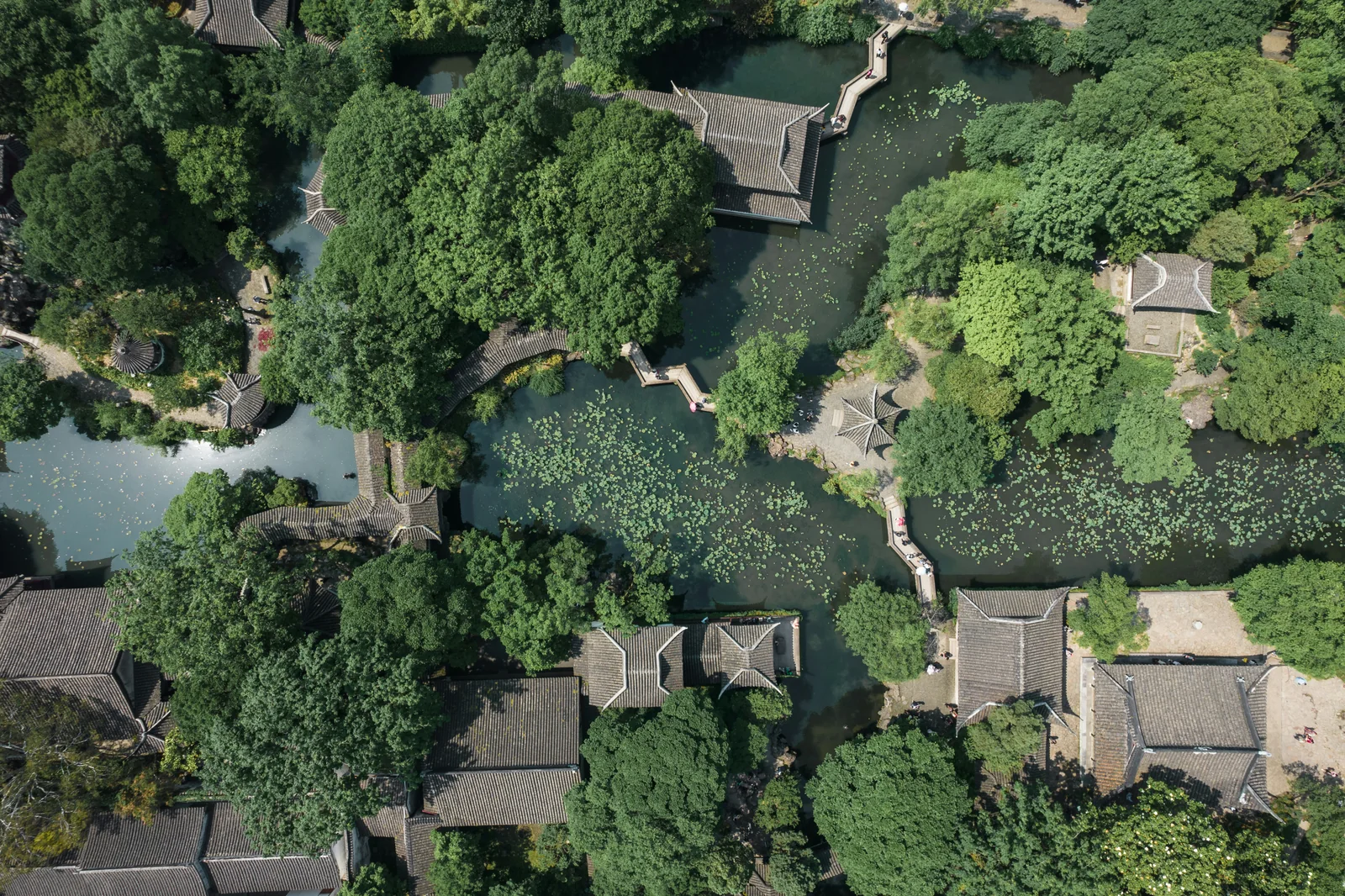
Across a lotus pond, water, a pavilion and tree canopies become one composition. Step into a corridor and the scale changes. An openwork window layers near and far; beyond the garden, a noodle topping separates one ingredient into distinct textures. Suzhou rewards this closer attention.
A wall that connects as well as divides
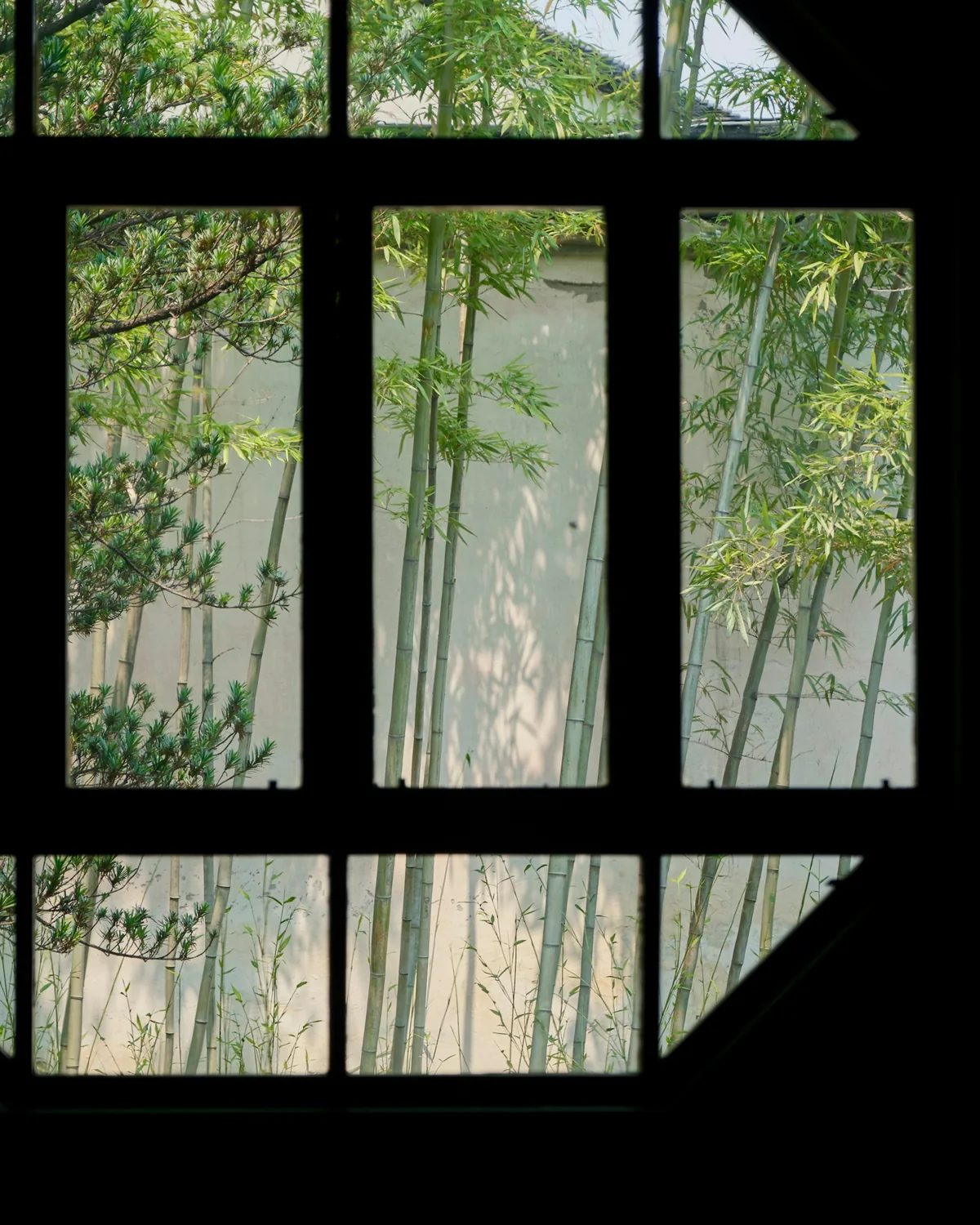
An openwork window is a decorative opening filled with pierced patterns. Suzhou’s local-history office describes its practical and visual roles: light and air pass through, while views connect spaces on either side of a corridor or courtyard wall. The wall remains, but the view continues.
Windows along the Humble Administrator’s Garden’s double corridor turn stone, water and foliage into successive compositions. Screens at the Lingering Garden’s entrance reveal parts of the principal scene while keeping others concealed. In both, the boundary helps a space unfold without showing everything at once.
Pattern has a spatial role
The window’s pattern is more than decoration applied to a building. Curves, straight lines and the density of openings govern how much can be seen through the wall. Light adds another layer. Motifs such as the zither, chess, books and painting bring cultural references into the structure.
This detail belongs to the larger method of the classical garden: water, stones, planting and buildings compose a version of nature within a residence. The result depends on the whole arrangement and on the making of an individual wall or screen.
A seasonal bowl beyond the garden
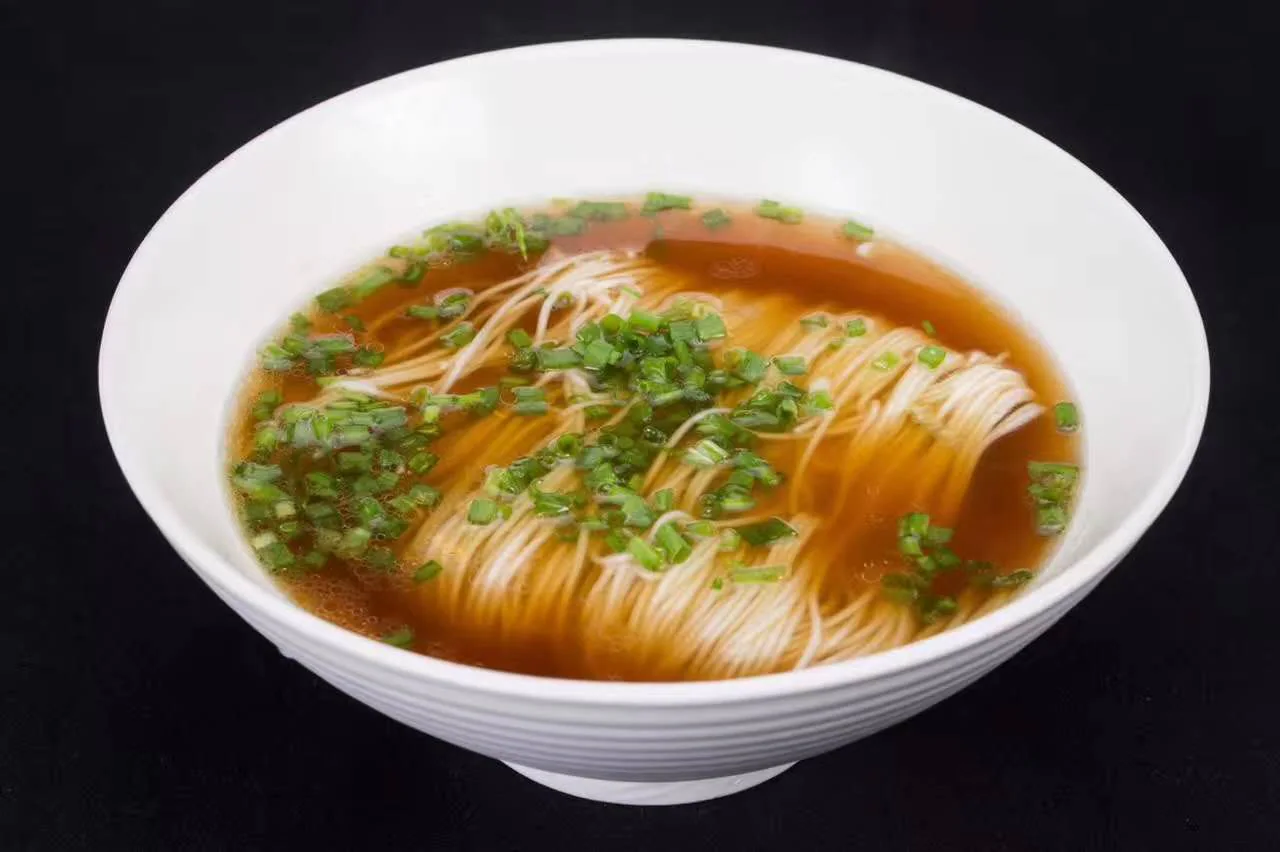
The table offers another account of the city’s precision. Suzhou’s tourism bureau describes a noodle shop in Songling’s Shengjiashe that changes selected toppings and pastries with the seasons. It is a particular local example, rather than a permanent menu for every noodle shop in the city.
Its summer three-shrimp topping uses shrimp meat, head paste and roe, rather than three species of shrimp. Separating and preparing these parts draws distinct textures from one ingredient. Like the openwork screen, the bowl builds its character through small differences.
Three parts of the shrimp
Meat, head paste and roe each have a place in this topping. The tourism bureau’s 2025 account describes it as a summer dish at one shop. Its interest lies in ingredient and preparation, not in a promise that it appears on every menu throughout the year.
What does the pattern leave unseen?
Facing a screen, notice what the densest section conceals. Move to one side and another layer of foliage or water appears. Pattern and landscape compose the view together.
From a window’s openings to a topping’s separate parts, Suzhou gives small details room to matter.
Sources and photography
UNESCO · Classical Gardens of Suzhou ↗
苏州市文化广电和旅游局 · 协顺兴面馆(盛家厍店)与时令三虾面 ↗
Fabrizzio Moncada / Unsplash · Photo source · Unsplash License
一只猫的橘 / Unsplash · cropped, resized, WebP · Photo source · Unsplash License
Finnnnnn / Wikimedia Commons · CC BY-SA 4.0 · resized, WebP · Photo source · CC BY-SA 4.0