TRAVEL AT EASE
Xi’an might first appear as an illuminated bell tower or a long grey wall. Look further and there is no single, uniform “ancient city”. Buildings, excavated remains and today’s streets carry different histories. Distinguishing them makes the place more vivid than an uninterrupted historical stage set.
The shape of the wall includes its repairs
The familiar city-wall outline took shape mainly under the Ming, using parts of earlier foundations, with repairs under the Qing and in more recent times. It is not the original boundary around the whole Tang capital. Read gates, moat and projecting defensive structures together as a system, rather than treating the wall only as a photographic backdrop.
Conservation belongs to that history. Rebuilding, reinforcement and roads passing through make the relationship between heritage and a working city tangible. From publicly accessible places, observe a corner, gate opening or road. A space once intended to control movement now also connects life inside and outside the walls. Evidence of repair need not be dismissed as a loss of history.
Even the Bell Tower changed position
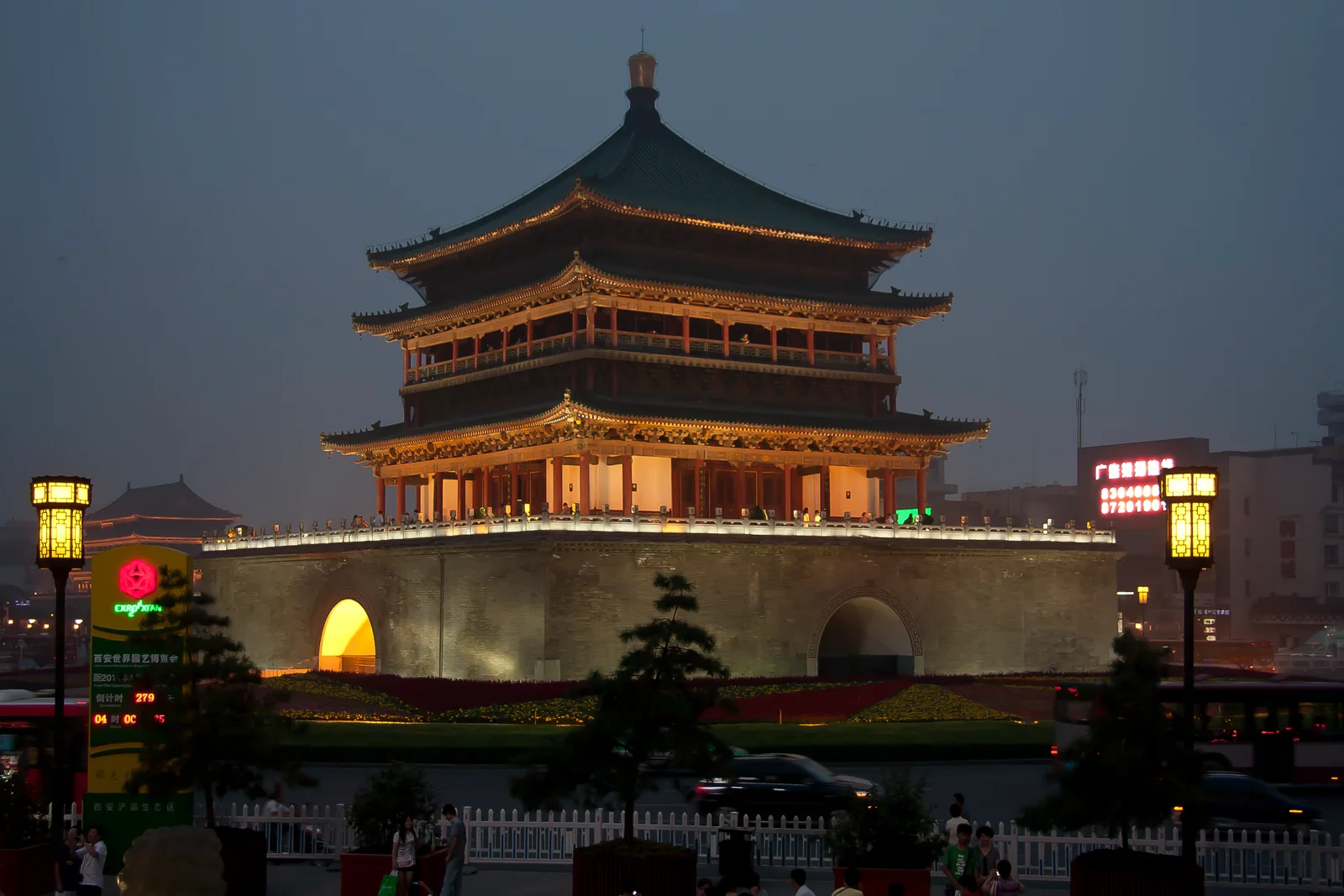
The Bell Tower was founded in 1384 and moved to its present location in 1582. It and the Drum Tower belong to a Ming architectural context, not a Tang palace complex. The photograph brings the Bell Tower and surrounding roads into one frame. Its platform and layered roofs share the scene with vehicles: landmark and changing city can occupy the same image.
Knowing about that move raises a useful question about the “city centre”. A centre need not remain fixed forever, and buildings can acquire new relationships with streets. From a distance, read the layered roofline; nearby, notice how people approach, move around and meet. These observations complement one another. Modern life does not have to be cropped out of every historic view.
A network of roads, several layers of time
The UNESCO-listed Chang’an–Tianshan corridor is a network of connected routes and heritage places, not one road extending straight from a gate. Goods, beliefs and technologies travelled through different communities and successive journeys. Understanding that network makes Chang’an a point of exchange, rather than an isolated capital enclosed by its walls.
Apply the same care to present-day Xi’an. The archaeological remains of Daming Palace, the Buddhist architectural tradition of the Giant Wild Goose Pagoda, Ming walls and modern Tang-inspired gardens are connected, but are not evidence of the same age or kind. Distinguish a site’s remains, a building maintained through different periods and a contemporary interpretation. Each can reward attention without every sweeping roof being described as original Tang fabric.
Different textures at the Guanzhong table
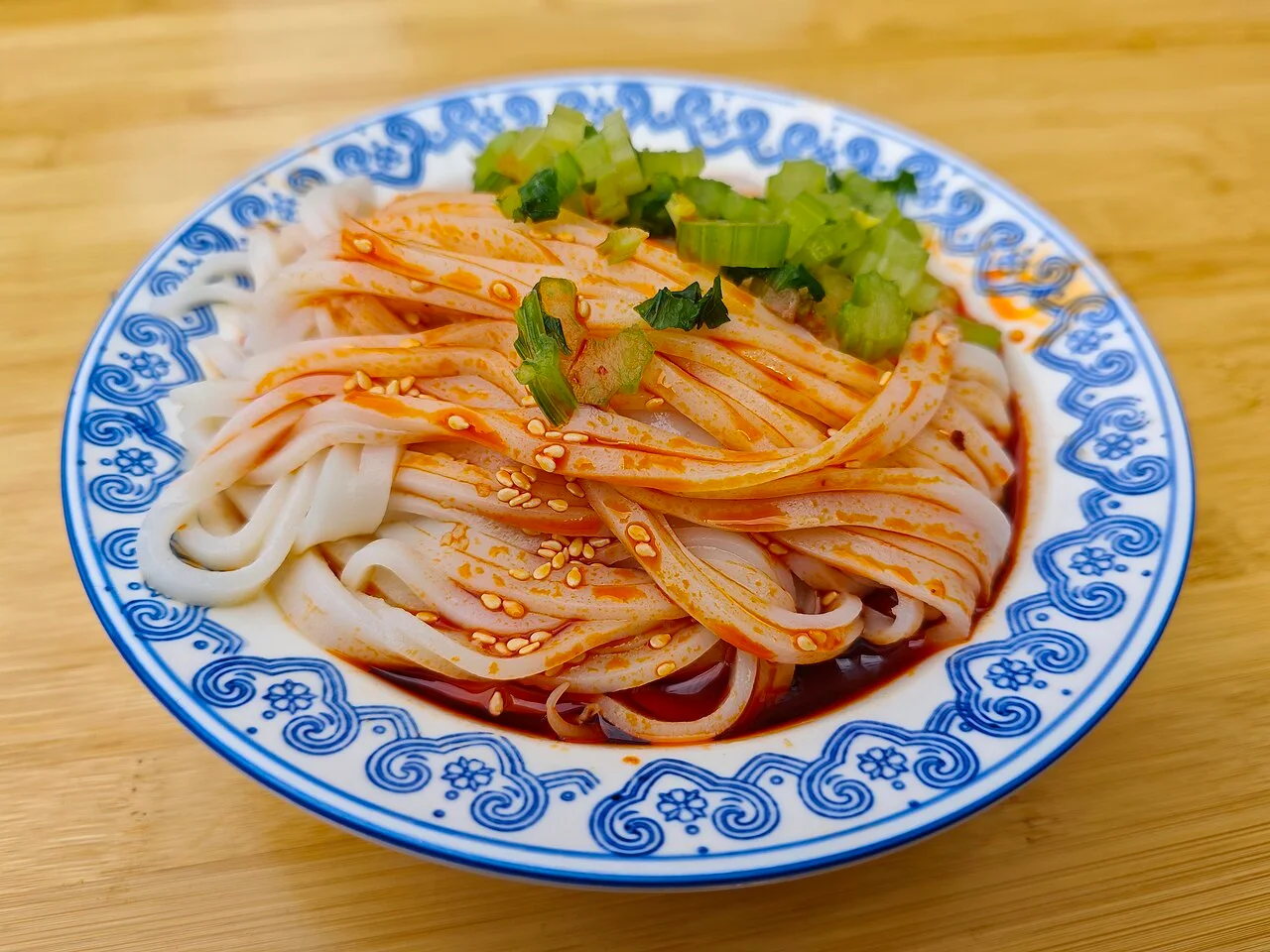
Lamb paomo brings bread and hot broth together; broad noodles, liangpi and roujiamo offer other textures. These are starting points for understanding local food, not a checklist to complete. A question about preparation may tell you more about a particular kitchen than another place in the same long queue.
Ask which layer of history you are seeing
For a building, distinguish construction, relocation and repair. At an archaeological site, notice what survives and what helps visitors interpret it. Different ages can each hold their own interest.
Xi’an’s depth lies in the differences between its layers of time.
Sources and photography
UNESCO · Silk Roads: the Routes Network of Chang’an–Tianshan Corridor ↗
David Castor / Wikimedia Commons · Photo source · Public domain (PD-self)
Liuxingy / Wikimedia Commons · CC BY-SA 4.0 · resized, WebP · Photo source · CC BY-SA 4.0