TRAVEL AT EASE
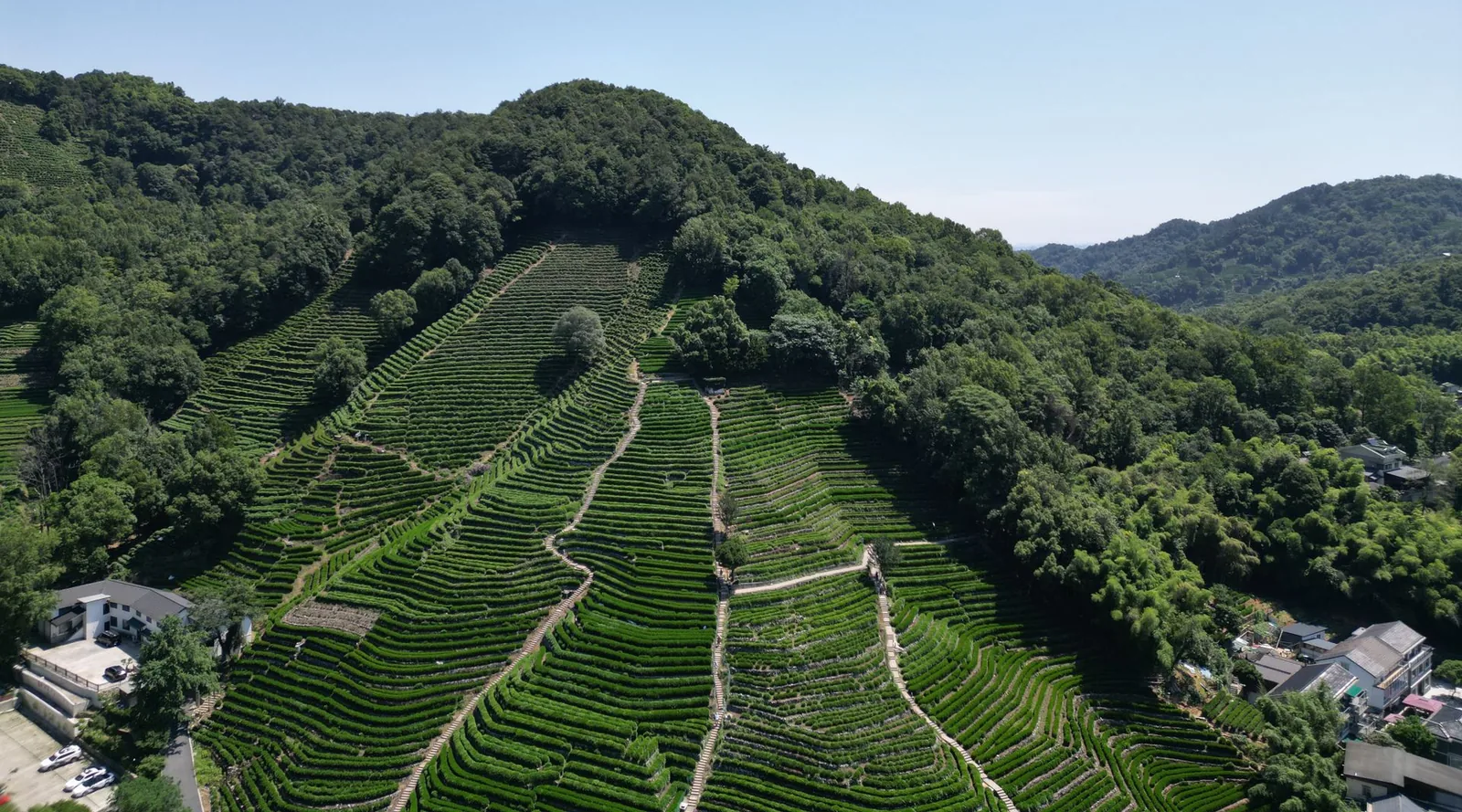
West Lake gives Hangzhou an expansive image. Tea brings the city into a smaller frame. Between a fresh leaf and a cup of Longjing lie spreading, heat, movement and waiting. The drink comes from a landscape, but also from decisions made by hand.
Movements answer the leaf
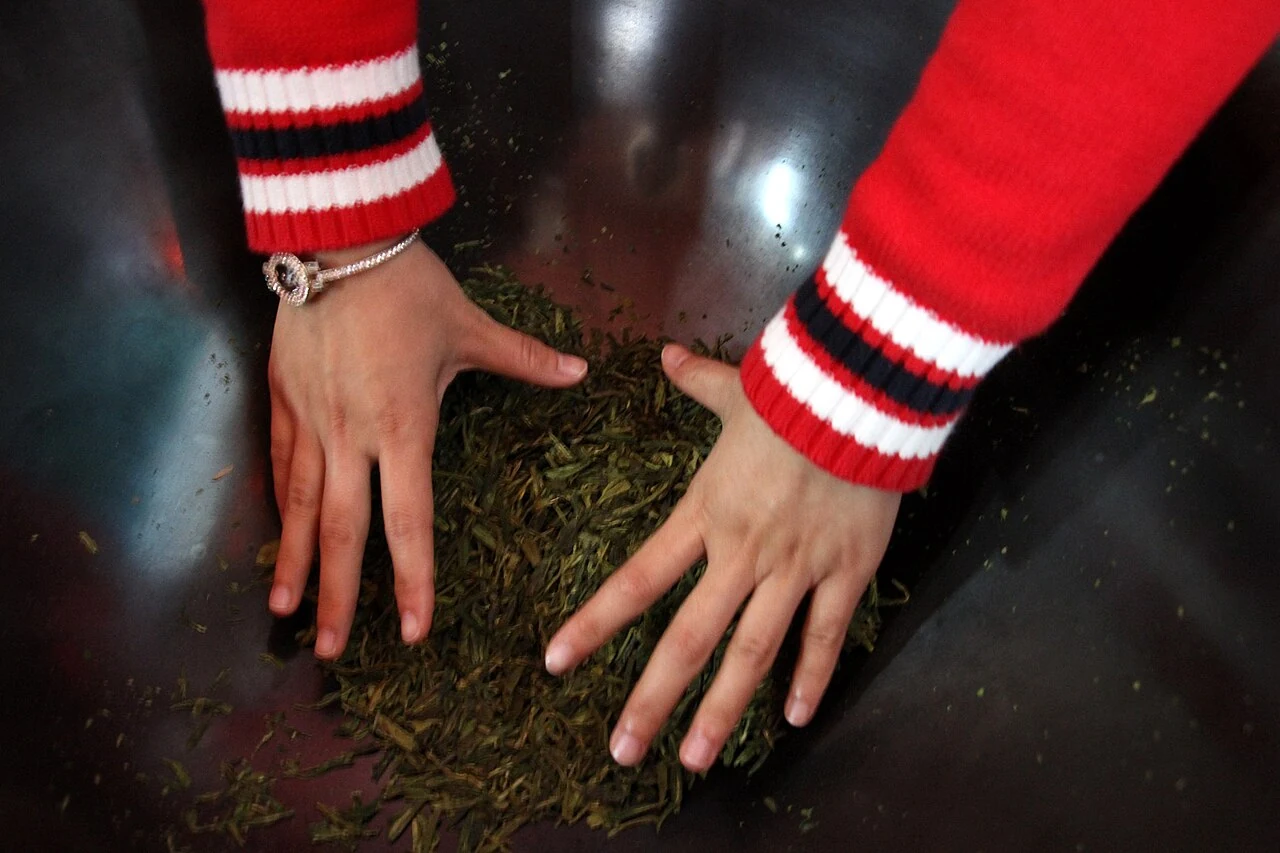
Hand-making West Lake Longjing involves coordinated movements: shaking, drawing, pressing, turning and rubbing among them. They are not repeated as one unchanging gesture. The maker adjusts them to the condition of the leaves and the stage of production.
Moisture must leave the fresh leaf, its form must develop and heat must be managed. The West Lake Longjing element of traditional green-tea making entered China’s national intangible heritage list in 2008. The practice preserves knowledge accumulated through this kind of judgement.
Two pan stages, different tasks
The West Lake Longjing Tea Association identifies qingguo and huiguo as key stages of fully hand-made tea. Between the initial pan work and the later shaping and drying are other steps, including allowing moisture within the leaves to redistribute. It is a sequence, rather than one uninterrupted session of stirring.
Fresh leaves, partly processed leaves and finished dry tea reveal this development in their changing form. The lake and hills give Hangzhou a broad setting; tools and leaves bring it closer. Even the familiar flat shape of Longjing retains the history of its making.
A local history in the cup
The China National Tea Museum lists a permanent Longjing exhibition at its Shuangfeng site. Museum knowledge and tea-village context offer complementary ways of understanding why making is linked to a particular landscape and its labour.
The cup then brings the process back to the senses. Notice the dry leaf’s shape and how it opens in water. As the infusion cools, the experience changes again. Tea acquires a sequence of its own, rather than a single general description of fragrance.
Dry leaf, then infusion
Dry tea and brewed tea offer different aromas and textures. Leaf form, liquor colour and the changing sensation after a sip make tasting more specific. A name or a package alone cannot explain origin and preparation.
Connect the stages of one leaf
Fresh leaf, leaf after the initial pan stage, finished tea and the opened leaf after brewing each retain a different part of the process. If you encounter these materials, compare their forms to give a familiar tea a visible history.
Hangzhou’s lake and hills open the view; particular leaves and gestures explain the cup.
Sources and photography
Amber Peng / Pexels · Photo source · Pexels License
Gerd Eichmann / Wikimedia Commons · CC BY-SA 4.0 · resized, WebP · Photo source · CC BY-SA 4.0