TRAVEL AT EASE
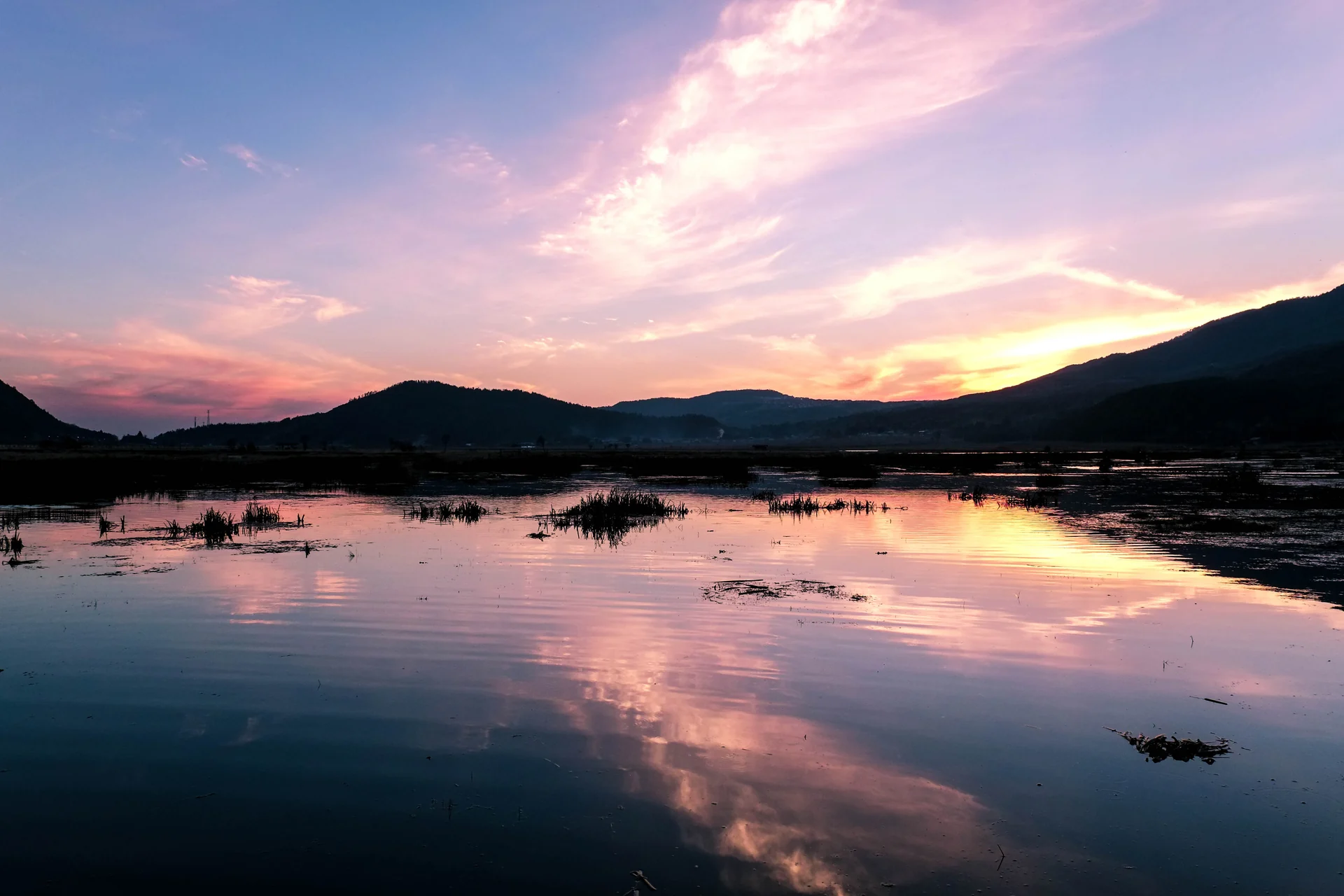
Beihai’s landscape emerges where grass meets water. Gaps between low islands hold the colour of the sky and reflections of surrounding hills. Follow those edges and a sunset view becomes an introduction to Tengchong’s volcanic setting, wetland life and distinctive rice dishes.
Grass that belongs to the water
From a distance, Beihai’s grass mats can look like ordinary ground beside a lake. Beihai is a volcanic dammed-lake marsh, with floating-mat swamp meadows known as caopai along its shores. Water, peat and marsh plants are all part of this landscape.
Grass varies in height, channels widen and narrow, and hills appear in the spaces between them. The reflections form many irregular pictures rather than one uninterrupted mirror. A ripple can change the water while the outline of a grass island remains distinct.
A wider landscape behind the wetland
Beihai’s basin reveals one part of Tengchong’s volcanic geography. The volcanic and Rehai landscapes offer other clues. Hot springs, fumaroles and mineral deposits provide visible expressions of local geothermal activity. Each setting has its own features to understand.
This context gives the scenery a more particular character. Begin with the meeting of grass and water at Beihai, then consider the region’s volcanic landforms and hot-spring landscapes separately. Grass mats and channels, hot springs and mineral deposits offer very different textures to look for.
Rice in more than one shape
At the table, Tengchong’s rice dishes offer another set of textures. A local account from Tengyue distinguishes dajiujia, made with diamond-shaped slices of erkuai rice cake, from ersi, slender rice-cake strands served in broth. Related ingredients take on different characters through shape and preparation.
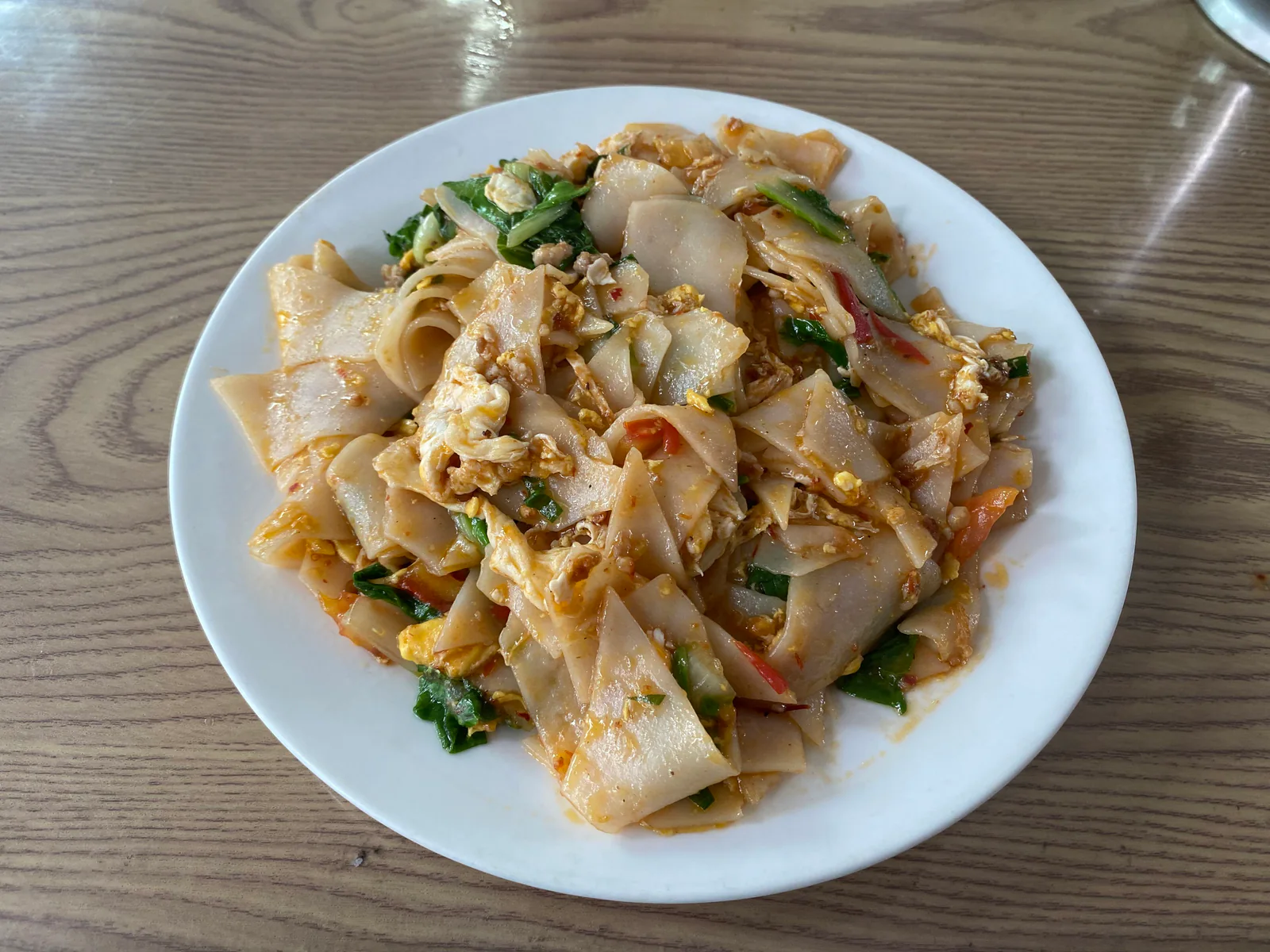
On a plate of stir-fried erkuai, notice how the slices sit among egg, meat and vegetables. A bowl of ersi directs attention towards the broth and toppings instead. Learning what the names describe makes the food easier to remember than a list of unfamiliar dishes.
A plate of dajiujia or a bowl of ersi
Dajiujia brings slices of rice cake together with egg, meat and vegetables. Ersi has preparations with stock or sour broth, among others. Compare slices with strands, a stir-fry with a soup: shape and cooking method give unfamiliar names a concrete meaning.
Follow one grassy edge
Trace a channel beside a grass mat, then connect it with a hill and its reflection. Where does water hold the sky’s colour, and where does it darken beneath the plants? These small openings give the wetland its form.
Water finding its way between grass islands, rice taking the form of slices or strands: Tengchong rewards attention to particular things.
Sources and photography
Windmemories / Wikimedia Commons · Photo source · CC BY-SA 4.0
瑞丽江的河水 / Wikimedia Commons · CC BY-SA 4.0 · resized, WebP, metadata removed · Photo source · CC BY-SA 4.0